
Reiki Healing Course in McLeod Ganj, Dharamshala, India | Yoga and Meditation
Aug 28
10 min read
Reiki often speaks to people at a quiet turning point. Stress has become too familiar. The body feels heavy. The mind keeps running. Something inside asks for a gentler way to heal, rest, and reconnect.
A Reiki Healing Course in Dharamshala the mountains of Mcleodganj offers that space. At Om Yoga Ashram, near Dal Lake in Mcleodganj, Dharamshala, students learn Reiki in a setting shaped by Himalayan air, daily yoga, meditation, pranayama, and mindful living. The Reiki Healing Course in Dharamshala is designed for sincere beginners, yoga teachers, holistic practitioners, wellness coaches, and anyone who wants to understand energy healing through both knowledge and practice.
Reiki is not a replacement for medical care, counseling, or professional treatment. It is a complementary practice used by many people to support relaxation, emotional balance, and self-awareness. When learned with care, ethics, and guidance, it can become a meaningful personal practice and a supportive healing tool for others.

What Reiki healing means in simple terms
Reiki is a Japanese energy healing method based on the idea that universal life force energy flows through all living beings. In a Reiki session, the practitioner places the hands lightly on or above specific areas of the body. The intention is to support balance in the energy system and invite deep relaxation.
The word Reiki is often understood in two parts:
Rei
Universal, spiritual, or higher wisdom
Ki
Life force energy, similar to prana in yoga
In yogic language, Reiki connects naturally with ideas such as prana, chakras, nadis, and the aura. A Reiki practitioner does not force healing or control another person’s process. Instead, they learn to become a clear and compassionate channel for energy.
This is why Reiki Training is not only technical. It also asks students to slow down, listen, practice self-awareness, and develop sensitivity. A good course helps students understand what they are doing, why they are doing it, and how to work with respect.
Why Mcleodganj Dharamshala is a powerful place to learn Reiki
Mcleodganj has long attracted seekers, meditators, yoga students, and spiritual travelers. Set in the Dhauladhar range of Himachal Pradesh, it offers a rare mix of mountain stillness and living spiritual culture. The area around Dal Lake feels calm, green, and removed from the pressure of city life.
That environment matters when learning Reiki.
Energy practices become easier to feel when the nervous system begins to settle. Meditation becomes more natural when mornings are quiet. Breathwork feels different when the air is crisp and the body has space to relax.
At Om Yoga Ashram near Dal Lake, the Reiki training is supported by a daily yogic rhythm. Students are not only introduced to Reiki symbols, hand positions, and healing sequences. They also practice yoga, meditation, pranayama, and breathwork to prepare the body and mind.
This combination helps students experience Reiki from the inside, rather than treating it only as a method to memorize.
What you will learn in the Reiki course
A well-structured Reiki Course gives equal attention to theory, practice, ethics, and personal experience. The aim is to help students feel confident, grounded, and responsible.
Reiki philosophy and history
The course introduces the roots of Reiki, including its Japanese origin and its place as a gentle energy healing tradition. Students learn the basic principles of Reiki practice and the attitude needed to work with energy safely and respectfully.
This foundation helps avoid confusion. Reiki is not about performance or dramatic claims. It is a simple, steady, compassionate practice.
Chakra alignment and energy awareness
Students explore the chakra system and learn how energy imbalances may be experienced emotionally, mentally, or physically. This does not mean diagnosing illness. It means learning to observe subtle patterns with care.
The course may include practices for:
Grounding the body
Sensing energy in the palms
Understanding the aura
Connecting breath with awareness
Supporting energetic balance through meditation
These practices help students become more sensitive without becoming overwhelmed.
Traditional hand placements and healing sequences
Hand positions are a key part of Reiki training. Students learn how to offer Reiki for themselves and others using traditional placements around the head, heart, abdomen, back, legs, and feet.
These sequences guide the practitioner so the session feels calm and complete. Over time, students also learn how to trust intuition while still respecting structure.
Distance healing and meditation techniques
Reiki Healing training often includes practices for sending healing energy across distance. This part of Reiki is usually taught with clear intention, meditative focus, and specific methods.
Students also practice meditation to sharpen inner awareness. Meditation helps the practitioner stay centered during sessions and avoid absorbing emotional heaviness from others.
Ethics and client communication
Ethics are essential in any healing practice. Students learn how to speak with clients, set boundaries, ask for consent, and create a safe session environment.
A responsible Reiki Healing practitioner does not promise cures. They do not replace doctors, therapists, or medical advice. They offer supportive energy work with humility and care.

How yoga and meditation deepen Reiki practice
Reiki and yoga support each other beautifully. Yoga prepares the body. Meditation steadies the mind. Pranayama refines the breath. Reiki brings attention to subtle energy.
When these practices come together, students often notice that they feel more grounded and present.
Daily yoga builds body awareness
Yoga helps students notice tension, posture, breath, and inner resistance. This matters because Reiki practitioners use their own body as a channel. If the body is tense and the mind is scattered, the session may feel less steady.
A daily yoga routine can support:
Better posture during healing sessions
Easier sitting for meditation
More awareness of the breath
Release of physical stiffness
A calmer nervous system
The goal is not advanced poses. The goal is awareness and balance.
Meditation strengthens focus
Reiki requires presence. Meditation trains that presence.
Through meditation, students learn to observe thoughts without chasing them. This skill is useful during Reiki sessions, especially when emotions arise or the receiver becomes deeply relaxed.
A quiet mind also makes it easier to sense subtle shifts, such as warmth in the hands, changes in breath, or a feeling of energetic flow.
Pranayama supports energy flow
Pranayama and breathwork are important parts of the course experience. In yoga, prana is life force energy. Reiki speaks of Ki in a similar way.
Breath practices can help students feel more open, centered, and ready for energy work. Simple techniques may be used to calm the mind, clear heaviness, and prepare for meditation.
Key benefits of learning Reiki
People come to Reiki for different reasons. Some want personal healing. Some want to support family and friends. Others want to add energy healing to an existing yoga, wellness, counseling, or holistic therapy practice.
Common benefits students seek include:
Improved relaxation
Reiki often encourages a deep state of rest, which may help the body and mind recover from daily stress.
Greater emotional balance
Many people use Reiki as a reflective practice during periods of anxiety, grief, change, or inner conflict.
Clearer energy awareness
Students learn to notice their own energetic state and take steps to restore balance.
Stronger intuition
With regular practice, students may become more aware of subtle feelings, inner guidance, and compassionate presence.
Personal spiritual growth
Reiki can become part of a wider path of meditation, self-inquiry, and healing.
Skills to support others
After training and certification, students can offer Reiki to friends, family, or clients within ethical and local guidelines.
The deepest benefit is often simple: students learn how to pause, connect, and offer healing from a place of kindness.
Who should enroll in this Reiki training
This Reiki Healing course is suitable for complete beginners. No prior energy healing experience is required. A sincere interest, an open mind, and a willingness to practice are enough.
The course is especially helpful for:
Beginner seekers who want to explore energy healing
Yoga teachers who want to add Reiki to their personal or teaching journey
Wellness practitioners and holistic therapists
Counselors, coaches, and bodyworkers who want a gentle complementary practice
Meditation students seeking deeper inner awareness
People going through personal transformation
Anyone interested in starting a Reiki practice professionally
Reiki Healing is also valuable for those who do not want to teach or work with clients. Many students learn Reiki only for self-healing, family care, and spiritual growth.
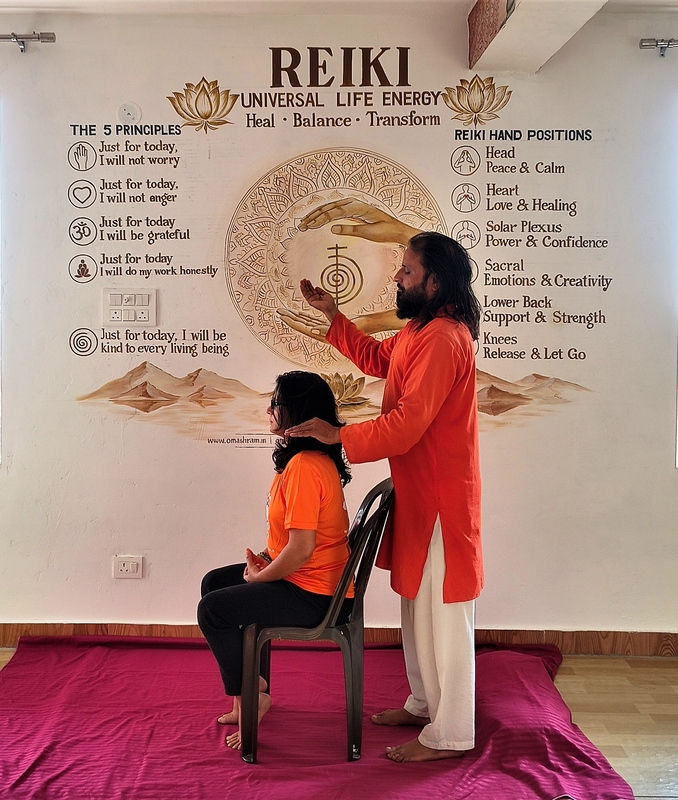
Why choose this Reiki Training at Om Yoga Ashram Dharamshala
A Reiki Healing course location should feel supportive, safe, and aligned with the practice being taught. Om Yoga Ashram in Mcleodganj offers Reiki training in a setting where yoga, meditation, breathwork, and spiritual discipline are part of everyday life.
Guidance from experienced Reiki teachers
Learning Reiki directly from trained teachers matters. A teacher can correct misunderstandings, observe practice, answer questions, and guide students through attunement and healing techniques.
Books and videos can introduce Reiki, but live training gives students feedback and confidence.
A balanced curriculum
The course includes both knowledge and practice. Students learn Reiki philosophy, hand placements, chakra awareness, meditation, distance healing, and ethical communication.
This balance helps students avoid two common problems: knowing theory without feeling the practice, or practicing without enough grounding.
Yoga, meditation, pranayama, and breathwork included
The Reiki Healing course is not isolated from daily life. Students follow a routine that supports their physical, mental, and energetic preparation.
Daily Yoga and Meditation help students remain centered. Pranayama and breathwork improve sensitivity to prana, breath, and inner stillness. This makes the Reiki learning process more complete.
Certification for future practice
After completing Reiki Healing training, students receive certification that supports their Reiki journey. For those who wish to work professionally, certification can help build trust and structure.
Reiki regulations vary by country, state, and professional setting, so anyone planning to offer paid sessions should also check local requirements and practice standards.
A supportive learning community
Healing work grows best in a respectful environment. During the course, students practice together, ask questions, share experiences, and learn how to hold space for others.
This community support often continues after certification through guidance, practice recommendations, and connection with like-minded seekers.
What you can do after certification
After completing the Reiki course, students can begin using Reiki in several meaningful ways.
You may choose to:
Offer self-Reiki as a daily grounding practice
Share Reiki with family and friends
Give Reiki sessions to clients, where local rules allow
Add Reiki to yoga teaching, meditation guidance, coaching, or holistic therapy
Continue toward advanced Reiki levels
Build a personal spiritual healing practice
Professional practice should grow slowly and ethically. Confidence comes from regular self-practice, continued study, feedback, and honest communication with clients.
A calm Reiki practitioner does not need to impress anyone. The work speaks through presence, care, and consistency.
A day in the Reiki learning experience Dharamshala
While exact schedules may vary, the rhythm of a Reiki course at an Om Yoga Ashram Dharamshala often follows a simple and nourishing pattern.
A typical day may include morning yoga, pranayama, meditation, Reiki theory, practical demonstrations, partner practice, self-healing, reflection, and evening quiet time.
The mountain setting adds its own support. Walks near Dal Lake, fresh air, and time away from daily distractions can help students absorb the teachings more deeply.
This kind of learning is different from a rushed weekend workshop in a noisy city. It gives the nervous system time to soften. It gives the heart time to open. It gives the practice time to become real.

How to prepare for the Reiki Healing Course Dharamshala
Students do not need advanced preparation, but a few simple steps can make the experience smoother.
Before arriving, it helps to:
Keep an open and respectful mindset
Reduce heavy distractions where possible
Begin a simple meditation practice for a few minutes daily
Wear comfortable clothing suitable for yoga and sitting
Bring a notebook for reflections and practice notes
Stay hydrated and rest well before the course begins
It also helps to arrive without pressure. Some people feel energy strongly during training. Others experience Reiki quietly. Both are valid. Sensitivity grows with practice.
The real heart of Reiki Training Dharamshala
A Reiki course is more than a certificate. It is a chance to build a relationship with stillness, compassion, and inner healing.
At Om Yoga Ashram near Dal Lake in Mcleodganj, Dharamshala, the training combines Reiki with yoga, meditation, pranayama, and breathwork so students can learn through the whole body, not only the mind. The Himalayan setting gives the practice room to breathe.
For anyone seeking personal transformation, deeper spiritual awareness, or a path into energy healing, this course offers a grounded beginning. Come with sincerity. Practice with patience. Let Reiki become a quiet strength you can carry into daily life and share with others with care.
Reiki Healing Course – Frequently Asked Questions
1. What is a Reiki Healing Course?
A Reiki Healing Course teaches the foundations of Reiki, energy awareness, meditation, self-Reiki practices, and traditional techniques for developing a regular Reiki practice.
2. Is Reiki Healing suitable for beginners?
Yes. Beginners can join an introductory Reiki course without previous experience. The training starts with the basic principles of Reiki, meditation, energy awareness, and practical techniques.
3. Where can I learn Reiki in India?
You can learn Reiki in peaceful spiritual destinations across India. McLeod Ganj, Dharamshala, in the Himalayan region of Himachal Pradesh, is a popular environment for combining Reiki with yoga and meditation.
4. What is included in Reiki training at Om Yoga Ashram?
Training can include Reiki principles, energy awareness, meditation, self-Reiki practice, Chakra awareness, mantra chanting, practical Reiki sessions, Yoga, Pranayama, and mindfulness practices, depending on the selected course level.
5. Can I learn Reiki with Yoga and Meditation?
Yes. Combining Reiki Healing, Yoga, Meditation, and Pranayama provides an immersive wellness and spiritual learning experience and encourages regular self-awareness and mindful practice.
6. What are the benefits of learning Reiki?
Reiki practice may support relaxation, mindfulness, self-awareness, inner calm, and personal spiritual development. Individual experiences and perceived benefits can vary.
7. What is Reiki Level 1?
Reiki Level 1 introduces students to the fundamental principles and practices of Reiki. It commonly focuses on self-Reiki, meditation, energy awareness, and developing a personal practice.
8. What is Reiki Level 2?
Reiki Level 2 generally builds on Level 1 with additional Reiki techniques and practices. The exact curriculum, symbols, and certification requirements depend on the Reiki tradition and teacher.
9. Can I become a Reiki practitioner after completing training?
Depending on the course level and certification provided, students may continue developing their Reiki practice and may be prepared to offer Reiki sessions. Always check the specific curriculum and certification requirements of the training school.
10. Why choose a Reiki Healing Course in McLeod Ganj, Dharamshala?
Learning Reiki in McLeod Ganj, Dharamshala offers a peaceful Himalayan setting for yoga, meditation, self-reflection, and spiritual learning. At Om Yoga Ashram, students can experience Reiki alongside traditional yogic practices and Himalayan ashram life.
11. Is Reiki a medical treatment?
No. Reiki is a complementary wellness and relaxation practice and should not replace professional medical diagnosis or treatment. Students should seek qualified healthcare advice for medical conditions while using Reiki, if desired, as a complementary practice.


Comments